

Services | Water Heater Repair
Water Heater Repair
(Rheem Specialists)
When your hot water turns lukewarm—or disappears entirely—you need answers fast. Our licensed team troubleshoots Rheem and other leading residential units, explains the “why” in plain English, and fixes the issue cleanly so you can get back to normal.
Signs You Likely Need A Repair

Inconsistent or no hot water
Long recovery time after showers or laundry
New noises (rumbling, whistling, humming)
Leaks at fittings or a damp pan
Discolored or rusty hot water
We’ll confirm what’s really going on and lay out next steps—repair vs. replace—so you can decide with confidence.
Safe Checks You Can Do (Before We Arrive)

Electric
Verify the water‑heater breaker is on.
Gas
Note the status light/code on the control; don’t attempt to relight if you smell gas.
Visual
Look for obvious drips around fittings or rust around the tank; do not remove covers or touch wiring.
Common Repairs
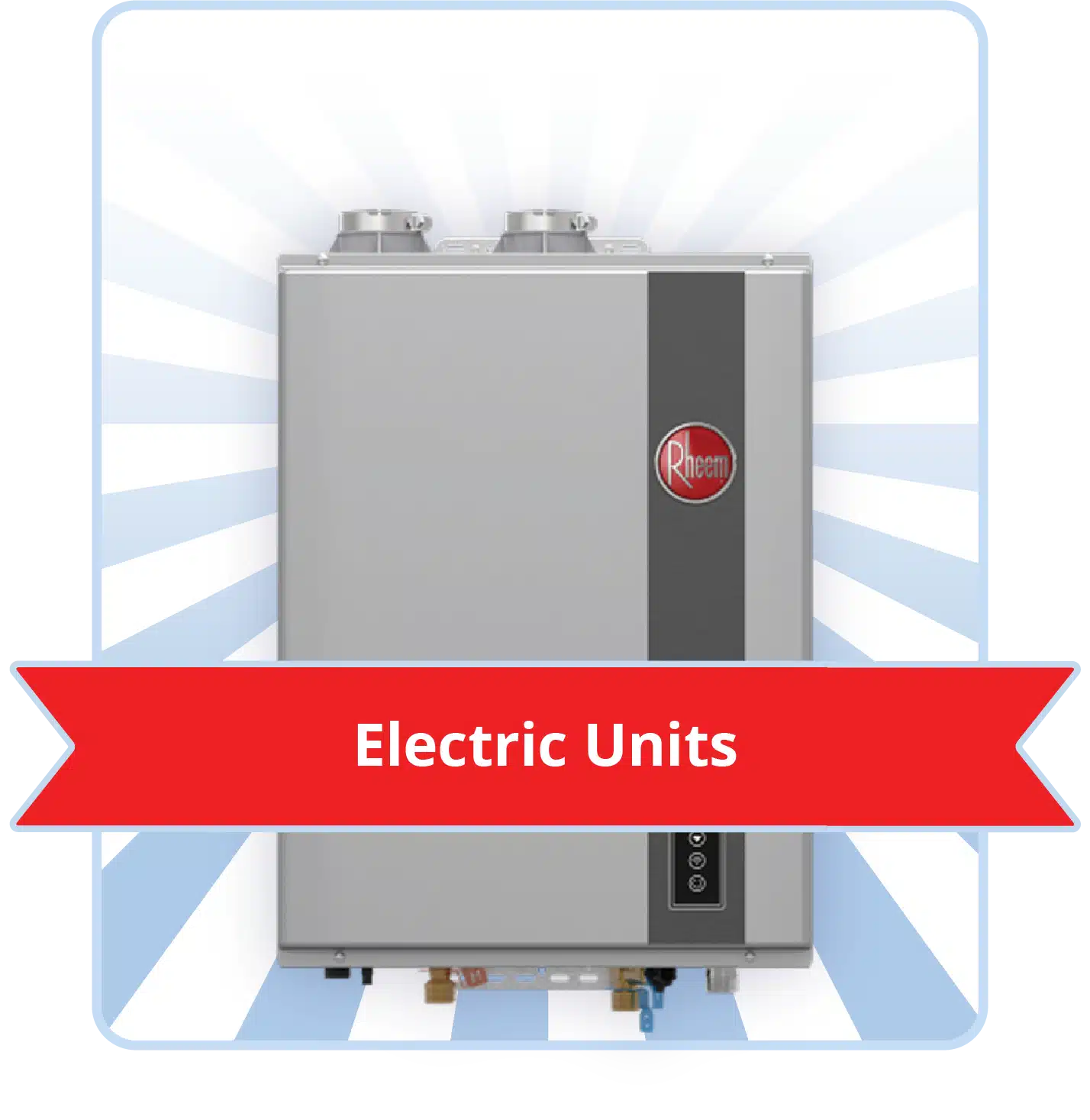
Electric Units
- Thermostats and elements
- Temp sensor and wiring issues
- Expansion tank/relief line problems (when repairable)
Gas Units
- Ignition/pilot and control valves
- Thermocouple/flame sensor
- Venting/combustion air issues and safety lockouts

Hybrid Water Heaters
- Compressor or fan malfunctions
- Sensor or control board errors
- Drainage and condensate line issues
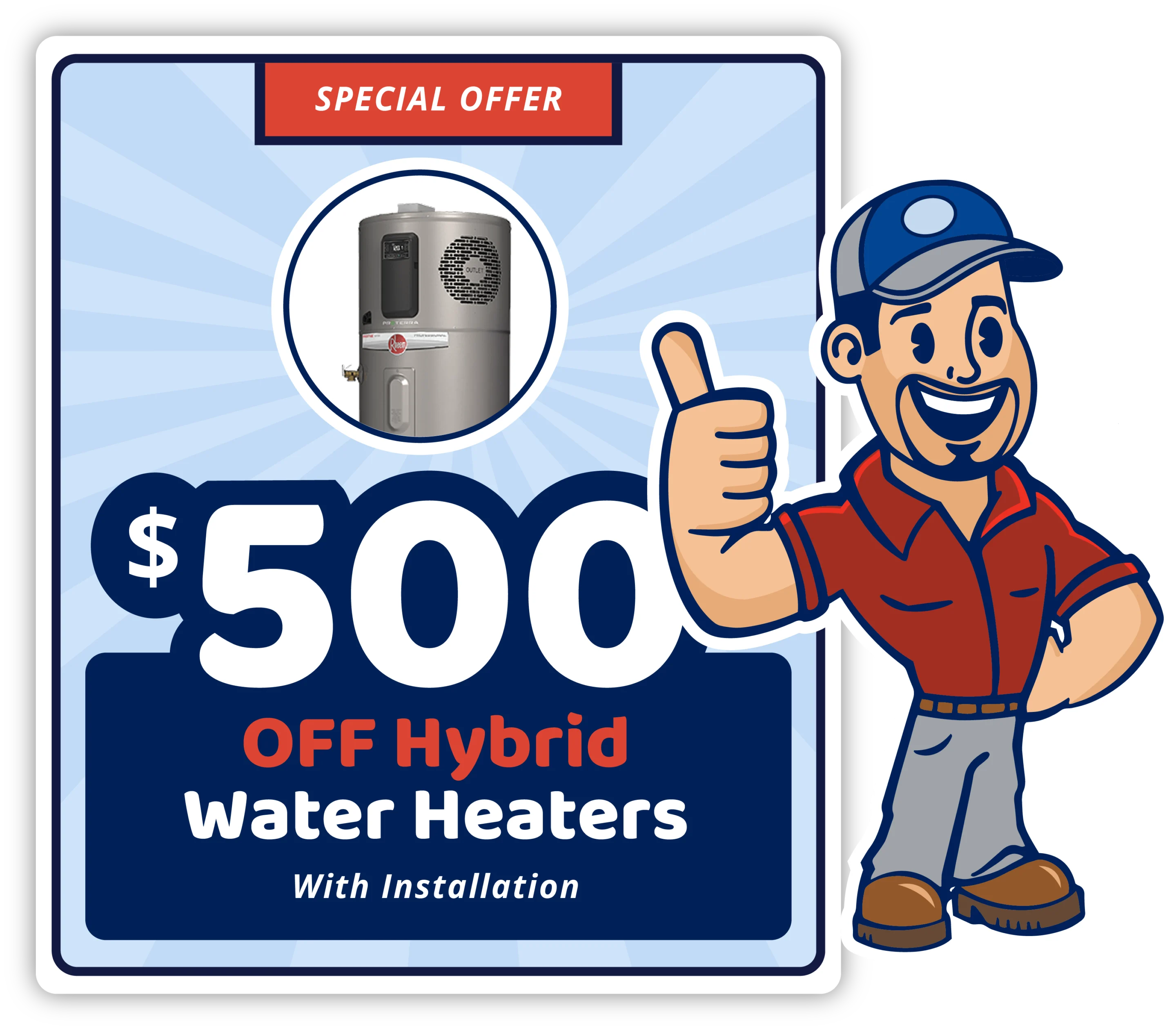
Hybrid water heaters combine electric heating with a high-efficiency heat pump system. If yours isn’t performing, we’re equipped to diagnose and repair these advanced systems so you keep saving energy—and money—without sacrificing comfort.
Looking To Upgrade?
Hybrid models are eligible for energy rebates and can significantly lower operating costs. We’ll help you compare options if it’s time to replace.
If the tank itself is leaking or is heavily corroded, repair isn’t safe or cost‑effective. We’ll show replacement options and a timeline so you’re not left guessing.

Repair Or Replace? (Simple Cues)
- Repair makes sense when the unit is mid‑life and the problem is localized (thermostat, element, ignition, etc.).
- Replace when the tank leaks, corrosion is advanced, failures are frequent, recovery can’t keep up, or the unit is at end‑of‑life.

Our Process (What To Expect)
01
Listen & inspect
— symptoms, age, recent changes
02
Diagnose & Explain
— the “why,” your options, and timing
03
Repair
— clean work, tested thoroughly
04
Next Steps
— settings, maintenance tips, and future‑proof advice

4.9 STARS
300+ Google Reviews
A+ BBB Rating
Financing Available
Helpful Resources & Next Steps

Water Heater Installation
Learn More

Compare Tankless vs. Tank vs. Hybrid
Learn More
Prefer Worry‑Free Upkeep?
Learn More
